02/28/24
Welcome back folks! This week, since we didn’t have any blackhat shows, I have decided to explore a more educational topic. Artistic VOICE! It’s something I’ve struggled with for a long, long time. Sure, I’m an artist, but for the longest time I’ve been under the impression that I was not worthy of being called a professional. Sure, folks pay me money to do art things, which makes me some level of working professional, but let me tell you the imposter syndrome is REAL. This hasn’t just affected my work as an artist, this is something that goes deep into the core of my being. I never believed my work was “good enough”. As a retail manager I excelled. I’ve been in that industry for decades, but to this day I still feel major imposter syndrome when I get offered positions above what I value my skill level to be. Why? Because in all of the ways that are important I’ve been terrified of putting my true self out there in fear of hearing someone else tell me those dreaded words, “that’s not good enough.” It’s been easier to fake it ’til I make it in that industry because I can put on some nice clothes, strap on my best business mask, and actually get the job done well. With art? Well that opens up new levels of vulnerability that are intense and far more personal than what my retail persona requires. So if I’m this scared to put myself out there, how can I begin to find my own artistic voice? Do I already have one?
Long story short, I was developing my voice all along without even knowing it. Art and music are, at their purest form, simple self expression. Everything you do, every choice you make, every emotion you feel while you are creating something is part of that voice. My art is different… most of it is juvenile and cartoony in style. No matter how much practice I put into drawing and painting over the years I was never able to achieve the level of realism in my art that I thought was required to make me a ‘real artist’. I undervalued every bit of the very things that make my art uniquely mine. A lot of that is due to my undiagnosed neuro-spiciness and woefully unsupportive family, but now I can do better. Again…How?
Just Create and Keep Creating-
Even if you think it’s a satchel of richards, keep going and trust in the process. The more practice you get doing art in any form, the more confident you’ll feel in the process and the better you will feel about the pieces you finish. I can’t tell you how many times I’ve absolutely hated an artwork or a song until it was actually finished and I could see the entire picture fully realized. Art doesn’t look amazing through every step of the creative process and it’s easy to let the ugly phases of a project discourage you, but getting past that is where growth truly happens. It can be really difficult for me to do something artistic every day. The motivation isn’t always there, but it’s important not to give ourselves a hard time when we don’t have the creative juice. I feel stagnant if I am doing the same things over and over again, so instead of working on improving technique by practicing brush strokes or something more mundane when I’m feeling blocked I look for inspiration in my everyday life…my oddest pieces tend to come from seeking inspiration online, but getting a wild idea from a stranger keeps me interested. Some of my most interesting and popular pieces were created during moments of artistic block and heavy insecurity. If I feel stagnant on visual art altogether I put it down for a few days and continue my artistic pursuits in music, or writing because practice is important.
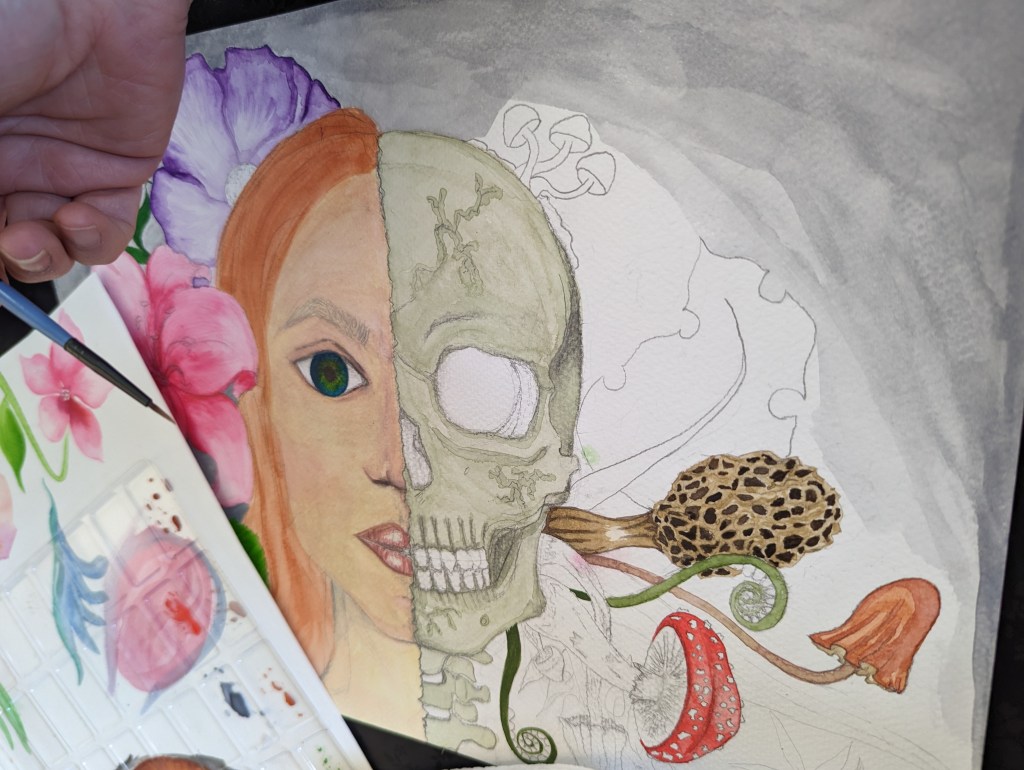
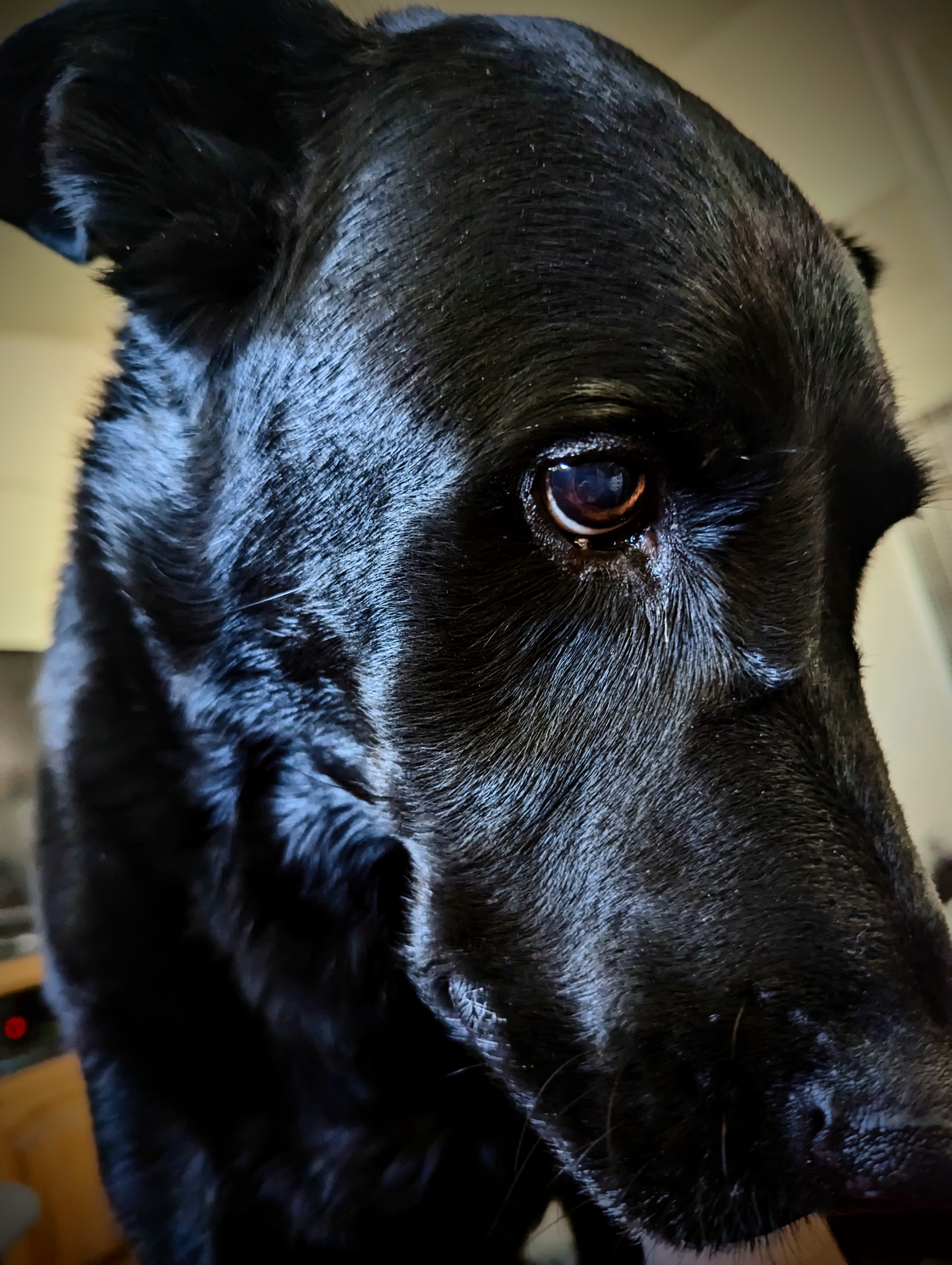
An attempt at something more realistic using watercolor paints.
Try New Things-
Getting experimental in my processes and my mediums has actually opened up a lot of interesting doors. I painted because my mom painted. I sketched and sewed and made beaded jewelry because my mom did. I tried playing guitar and bass because my dad was a musician. I started where I was comfortable because I had seen someone else doing these things my whole life. What they don’t do is photography, digital art, vinyl and screen printing and about a million other things. Don’t get stuck on “I don’t know how to do that, so I can’t try it”. You don’t need instruction on someone else’s techniques to get started on a new medium, but there are countless instructional videos for nearly every medium or artform you could possibly want to try.
The real point on this one is, don’t be afraid to try something new even if you aren’t sure how the ‘pros’ do it. It will hold you back from potentially monumental self discovery and growth.
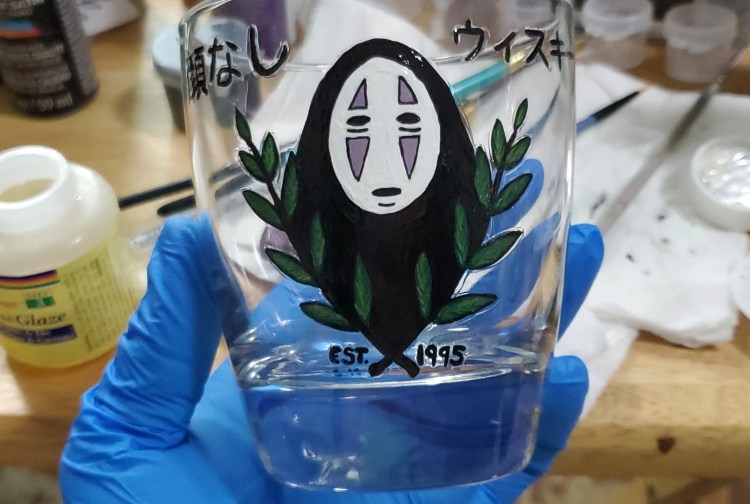
Went through a “painting on glass phase”.
Inspire Yourself-
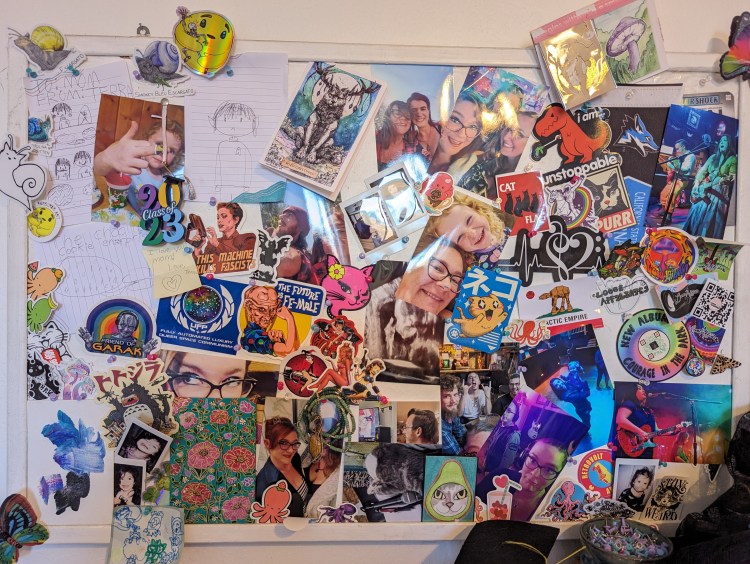
It’s important to be able to find inspiration in all sorts of places, but having some physical visible or otherwise tangible media to ingest regularly in your workspaces can be incredibly helpful. Some artists make playlists of music from their favorite performers to listen to and study, while others might find greater inspiration in a collage board of artworks or images they love. I have my own methods that work for me, one of which is having a cork board covered in pictures of my friends and I doing musical things, stickers that I’ve designed for folks, artworks and trading cards I’ve collected from other artists in my social networks… I realized that one of my pitfalls was discouraging myself from starting or completing projects because I didn’t believe in my own abilities. Putting my works and trades on display for myself actually boosted my confidence and encouraged me to push through a few projects I didn’t think I would be able to complete.
Get Analytical-
Once I got back into the habit of creating art and began experimenting with styles and mediums and things outside of my comfort zone I had a lot more work to take a step back and look at. It was much easier to see the bigger picture when a larger body of work was staring back at me. When you have a body of work to analyze, you can begin to take techniques you liked, color palettes, specific mediums, styles, and even specific models/characters/items you liked from your previous works and develop those parts even further. This goes for music too. Having amassed a small but modest body of lyrical and vocal work I can see which things stand out, and what falls flat. I can pick out vocal melodies that I can build off of and make better, and I’m more apt at writing something that has some artistic meat to it.
Get Focused-
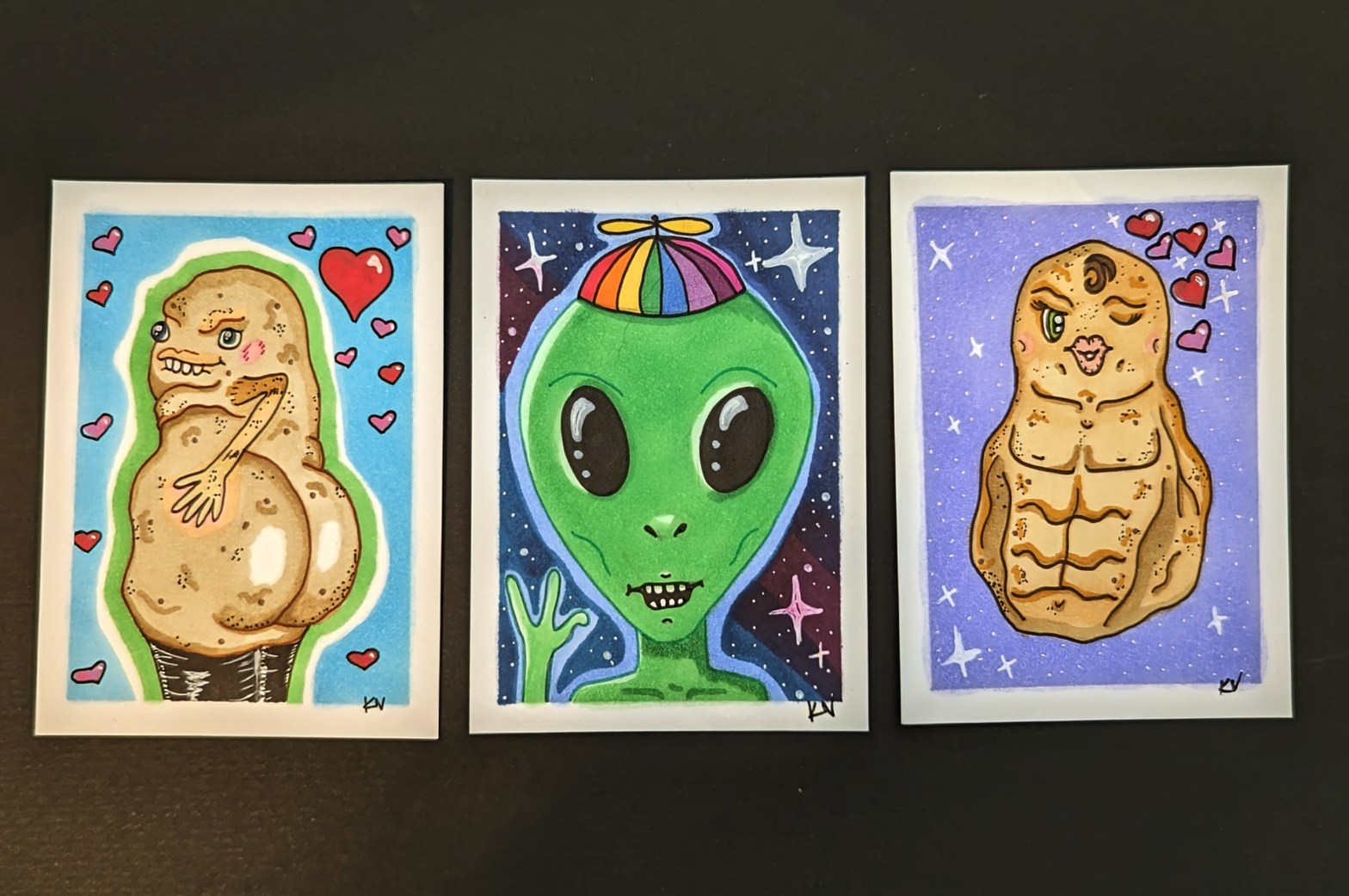
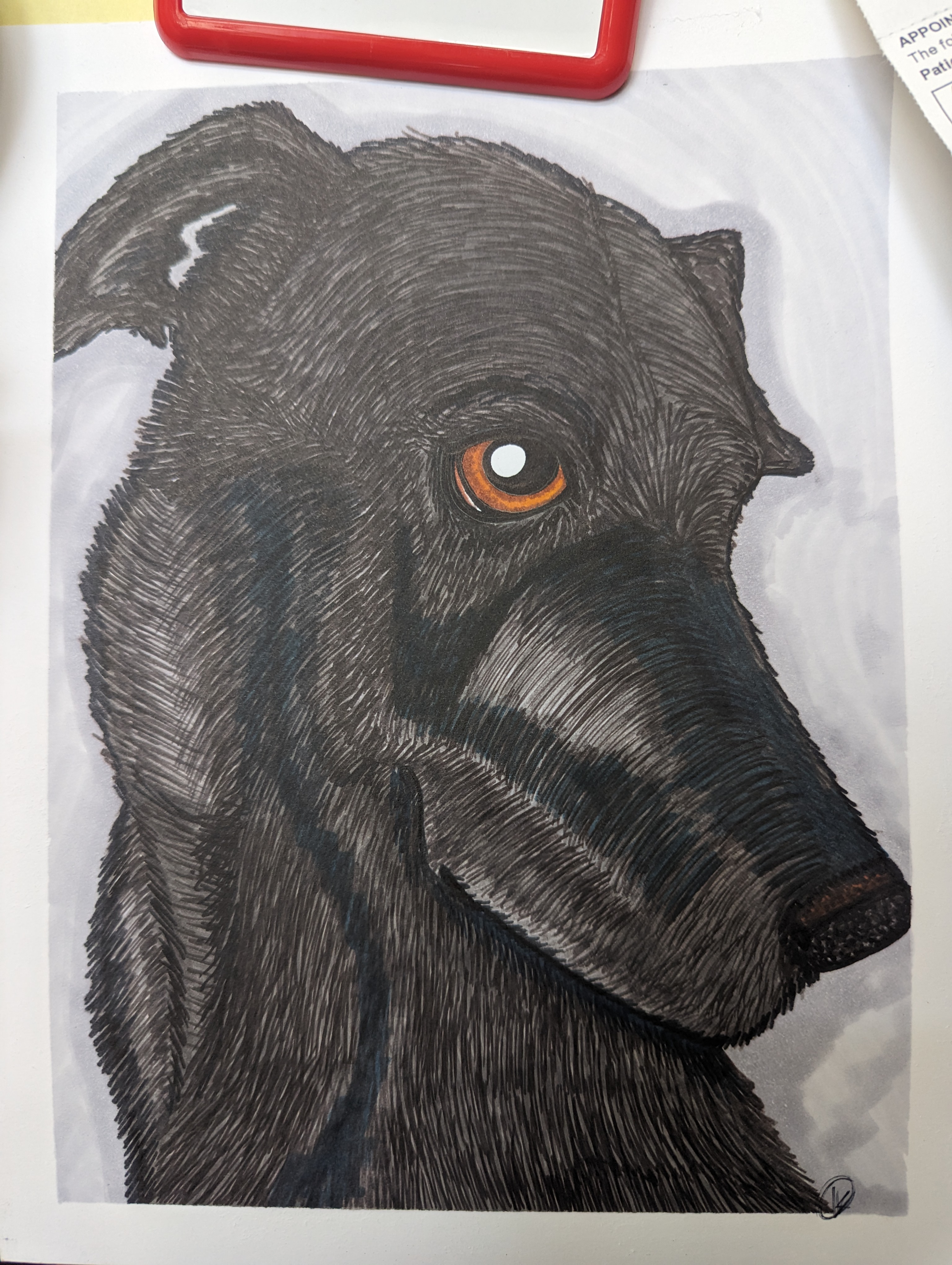
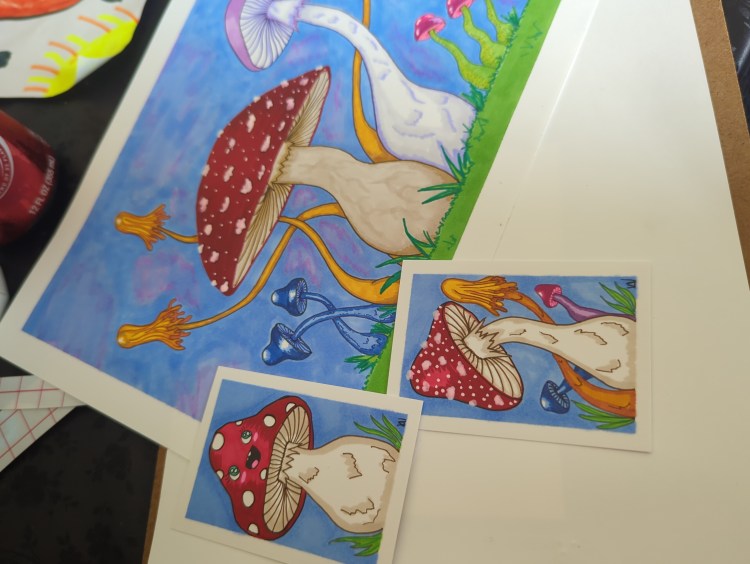
After you’ve had time to look over your previous works and have picked out the parts you think are the best fit for you, this is where you start to narrow your focus. Take those bits you’ve picked out from your work that you think might be “Your Thing” and challenge yourself to do that thing for a month or three. This might mean that you have chosen one medium to focus on, or a specific type of subject, a particular genre or musical style, etc. For me, I drew cartoony trading cards with my Sigma Micron Pens and my Ohuhu Alcohol markers because that was the medium that I could get the brightest colors and the most expressive characters.
Return of the Analyzer-
Once you’ve done your month or three of madness practicing your ‘things’ it is time to analyze your work once more. If what you produced during that 30+ day period feels wrong or isn’t quite the fit you were hoping for, this is where you can pivot or try something new. I’m not saying you should give up on the previous stuff, but don’t be afraid to tweak what you’re doing to make it a better fit. After I looked at my month of trading cards I realized that some of my subjects were simply outside my wheelhouse. It wont stop me from trying some of these things again, as I can’t improve if I don’t actively try to, but it did help me focus on the things that I could do comfortably.
Now this part is where I differ in opinion from some of these other articles I read about finding my artistic voice. I realize no one can tell me who I am, that is for me to decide, but those you consider your audience can certainly push you in uncomfortable directions. Don’t be afraid to branch out and try new things that sound fun or interesting, but:
KNOW YOUR LIMITS-
One of the biggest mistakes that I have made as an artist is not knowing when to utter the dreaded unequivocal “NO” when discussing potential projects with clients. I’ve had friends and family get excited and want me to do/make a thing for them during my experimental phases of learning. Sure, I could do some neat stuff already and I hate to shy away from a challenge, but when money becomes involved in an artistic encounter it can be hard for me to say no even if it’s not something I’m totally confident doing. Has this gotten me into trouble? Not in a long time, I know better than to accept money for something I am not sure about, but it has certainly happened. Not earth shattering stuff, but certainly makes life unnecessarily stressful. If you know you can’t do it, it’s ok to say no. The images below are of a commission I did last Christmas for a client from a Facebook group. While it turned out well, it was a tough process during which I nearly quit more than once.
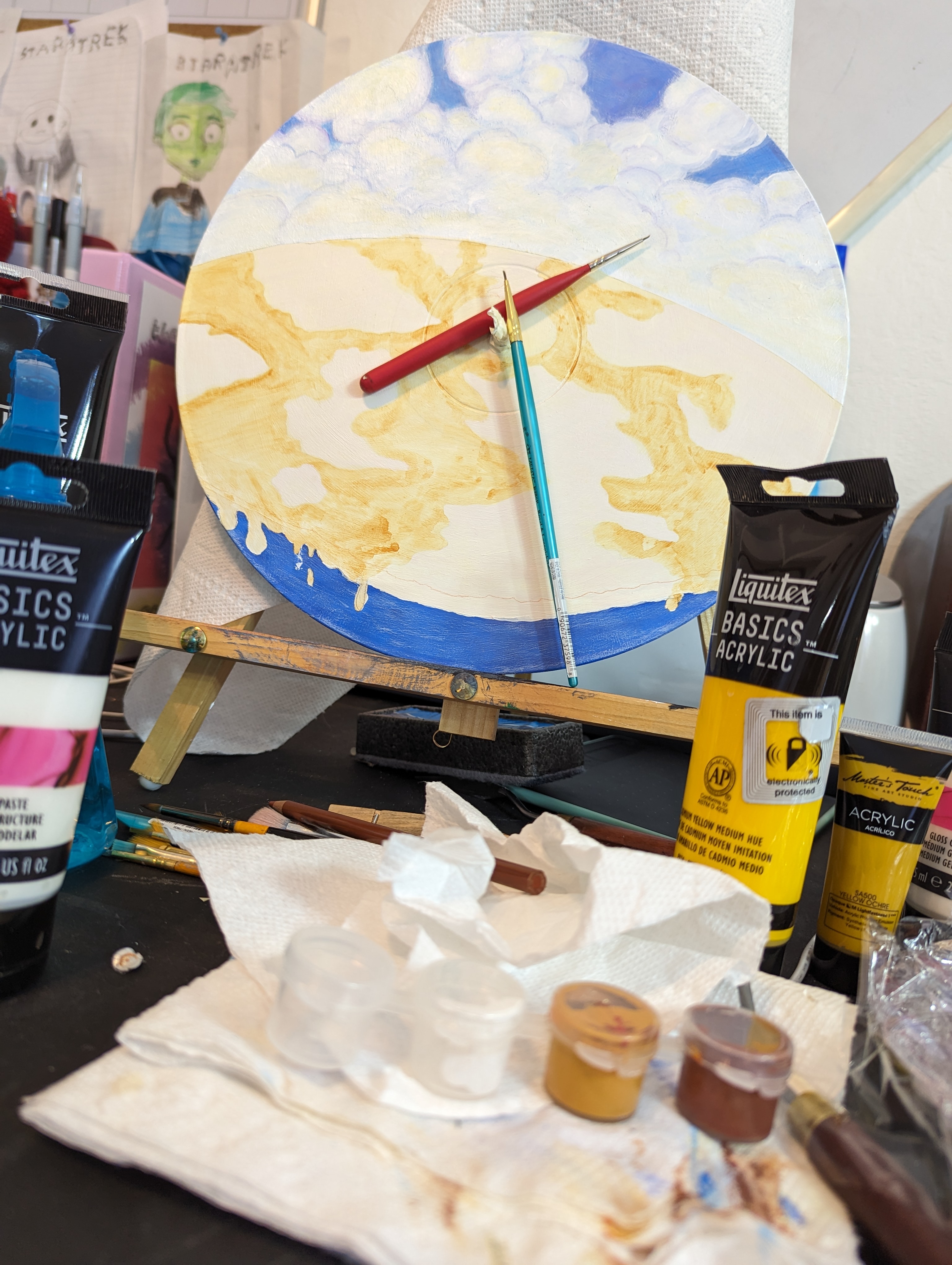
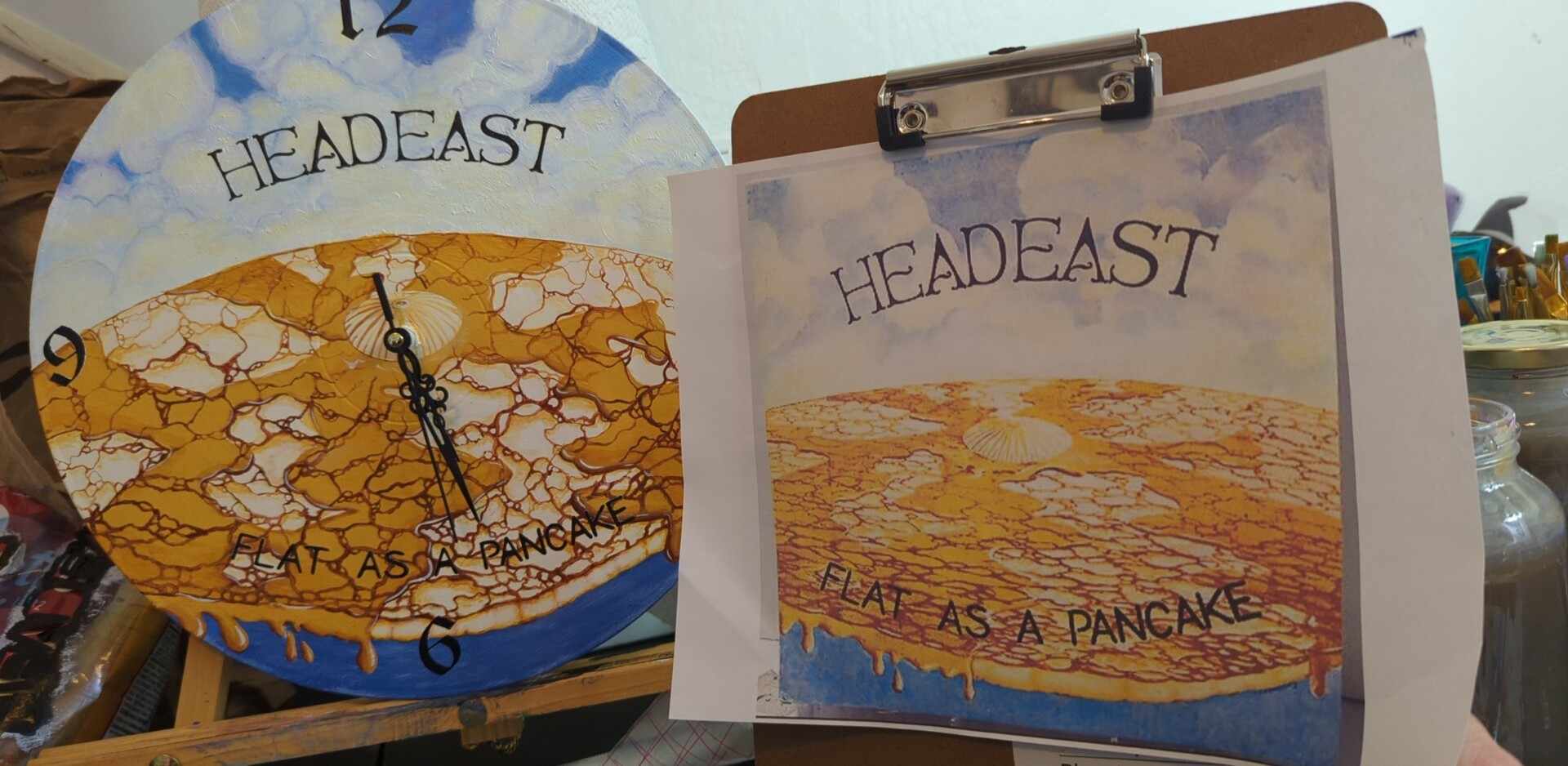
Turned out the fella who received it as a gift along with the original album it was painted after actually really, really loved it. So even though I thought it would never get to where it needed to be, and that it wasn’t good enough to charge money for, I put trust in my process, pushed through, and actually turned out to be completely wrong.
Join Groups/Seek Critique-
This one was pretty hard for me. No matter which art I’ve studied, I still dread actually putting my work out there. I wasn’t ready or willing to hear criticisms on something so personal to me. My own voice was the hardest to experience this with. Believe it or not, I took acting classes, public speech classes, and a voice class back in the early days of my college career. NOTHING was as terrifying as physically standing in front of people using my voice as an instrument. If anyone had criticisms it wasn’t a piece of paper or a canvas they were talking about. It was my physical being, my actual voice. OUCH. But eventually I figured out that there really are constructive things to be gathered from these sorts of critiques. They weren’t telling me I was bad, they were telling me I was good, but could be better if I worked on certain things. This was back in the very early 2000’s mind you. We had internet, but we didn’t have social media in the form it holds today. I didn’t have facebook and insta and a billion other places to share and seek critique. I had to physically seek it out. Now, I am part of quite a few amazing groups online that serve exactly this purpose for me and others just like me. Some of these people, including other artists, actually helped me realize that I did indeed have a style and a voice of my own artistically even if I didn’t see it or believe it yet.
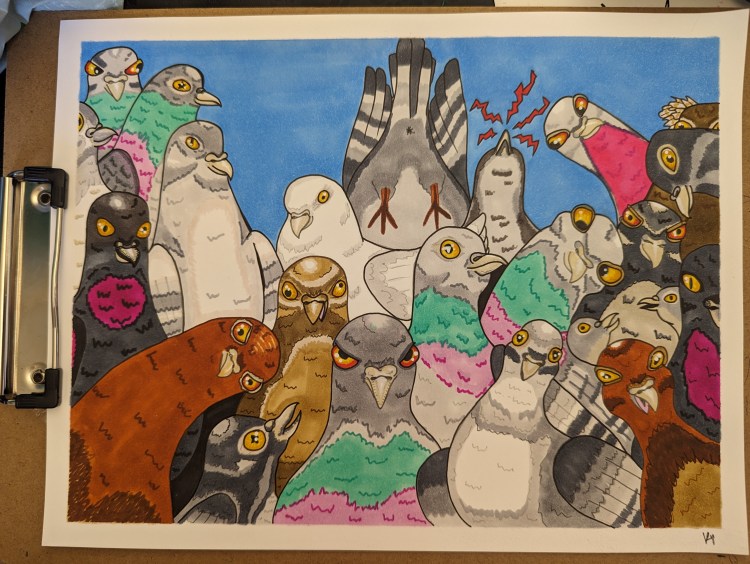
This is by far one of my most popular pieces that has been shared online. Enough that iterations of it may be available for purchase online in the near future.
Create for You not for THEM-
This is truly the most important part of the process in my opinion and one of the hardest bits for me personally to overcome. I make art for others. My silly drawings make my friends happy, they makes group members smile, and usually they make me laugh quite a bit during creation. The problem with making my art for someone else is that it loses some of what makes it uniquely yours. You are catering to someone else’s whim. Now, I’m not saying you should never do commissions. You absolutely should, given the opportunity, but this goes back to the very first thing we talked about… SELF EXPRESSION. Right? The most important part of this whole thing is to make sure you are doing what YOU love. Do art that makes you happy for YOU. If painting using bits of trash and splatters is what you love doing and you get excited about it, others will get excited WITH YOU. Sure, you can do things outside your wheelhouse, never put limits on yourself and say “I CAN’T” (unless they want to pay you money and you know for certain you can’t actually deliver what they are looking for), but maybe say, “I’d love to give that a try, but no promises.” Take those as learning experiences. Sometimes you may surprise yourself, but biting off more than you can chew when money is involved is never a good time.
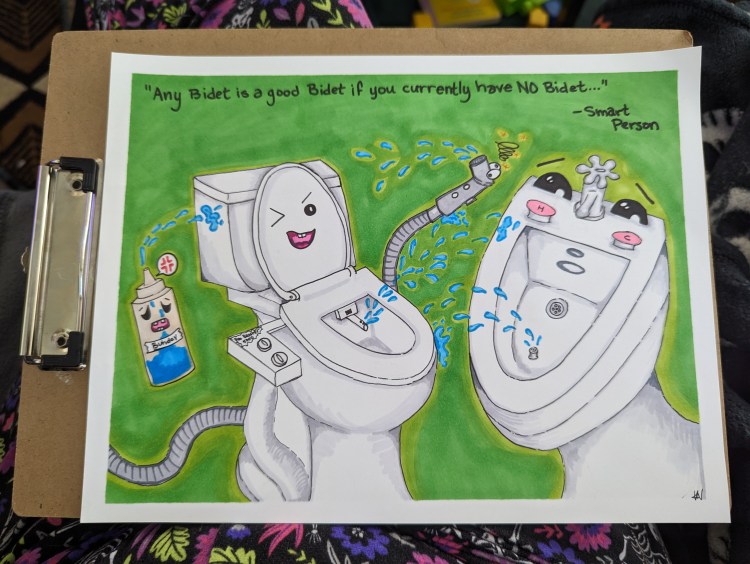
While this piece was certainly inspired by someone else, it brought, and continues to bring solid amounts of laughter any time I show it off.
Eventually, after experimentation, failures, successes, and hopefully a lot of laughter you will realize that a lot of what you were looking for was already mostly there you just needed the practice to build the confidence in yourself. At the end of the day, every choice you make as an artist, be it musical or otherwise, is part of your voice. You just needed to learn where best to apply it and what bits to project/mute/dampen etc. My voice? It’s loud, colorful, silly, quirky…I draw angry pigeons and silly bidets, wild mushroom scenes that make no sense, hot potatoes in leather boots, and anatomically incorrect brightly colored cephalopods…why? Because its fun and it makes me laugh, that’s why. I want to see the world in bold exciting colors and silly characters. Musically, honestly it‘s pretty much the same. I sing about broke millennial tropes and comparing a fictitious boyfriend to a housecat. While musically I’m a bit more subdued, the personality and the voice still belong to the same person and I feel more confident expressing myself musically now that I’ve found my true artistic style.
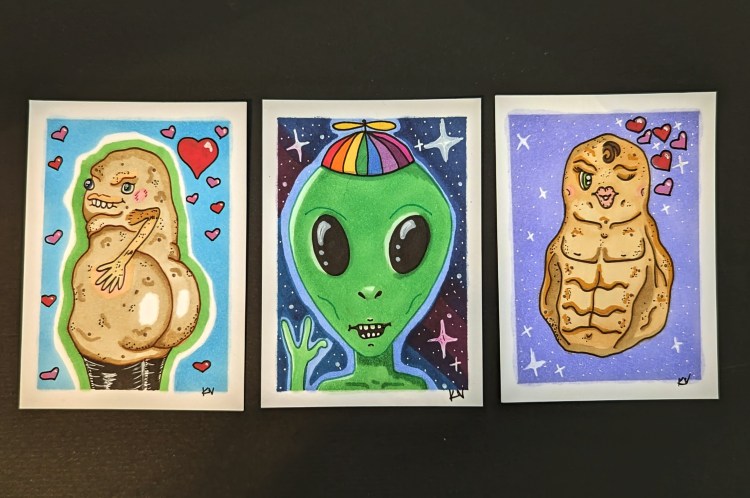
What it all breaks down to is: Don’t be afraid to be unapologetically you through your art, whatever your medium. You won’t be the right flavor for everyone and you may not make a ton of money, but there’s honestly nothing more freeing than finding your voice and expressing it loudly and brilliantly through art.
Stay safe, laugh plenty. Until next week my loves…
 blackhat